








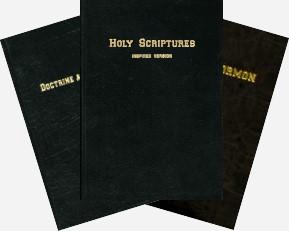




Make a Donation to the Deluxe Book of Mormon Printing Fund!
Download Current Directory of Independent Restoration Branches (PDF)
Why Independent Restoration Branches Must Remain Independent (PDF)
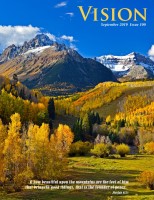
This is an article summarizing the Restoration branches movement within the RLDS Church and why they must remain independent until the Lord brings His Church into full order by restoring its legitimate higher quorums. This article appeared in Vision 115 (June 2023), pages 14–18, and it is a slight revision (by the author, Vance Snively) of the same article appearing in Vision 99 (June 2019), pages 12–16.We Are a Not-for-Profit Organization
 Contribute! |
The Restoration Bookstore is owned by Price Publishing Company, which is a not-for-profit corporation. Thus, you will not be charged tax on your purchases, and your contributions will be tax exempt. To retain our tax-exempt status, we must rely on contributions—not sales—for the major part of our funding. Any contributions that you give us support the operation and maintenance of the Bookstore, as well as the publication of materials including the Vision magazine.
Using the Menu Bar and the Home Page
The menu bar is at the top of the home page and all other pages in our site. It is the main navigation to all of the the products for sale on our site, as well as the free information (designated as "online" in the menu item name). Please note that the main-menu item of "Articles Online" is still under construction. To use the menu, hover your mouse pointer over a main-menu item. If no sub-menu appears, click the main-menu item to go to that page. If a sub-menu does appear, move your mouse pointer to the sub-menu item that you desire and click it to go to that page. Sub-menus will disappear when you move your mouse pointer off of them. If you do not wish sub-menus to disappear, click the main-menu item associated with the sub-menu. The sub-menu will remain visible until you click elsewhere on the page. The menu bar has over thirty main-menu items. To get them all to appear, hover your mouse pointer over, or click on, the "MORE" main-menu item, which is the last item on menu bar at the top of the page. What appears to be a sub-menu will appear. While this is actually a part of the main menu, it acts like a sub-menu as far as its appearance or disappearance from the page. You will find that it also has sub-menus associated with various links that will take you to our products.
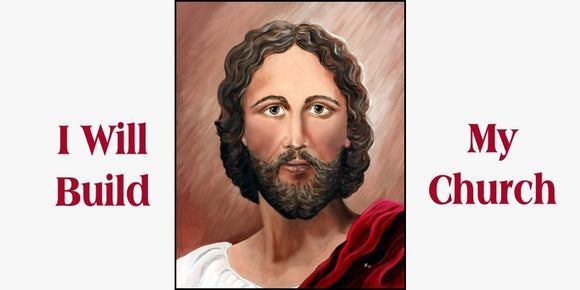
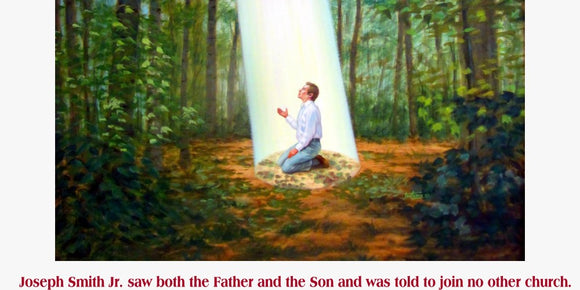
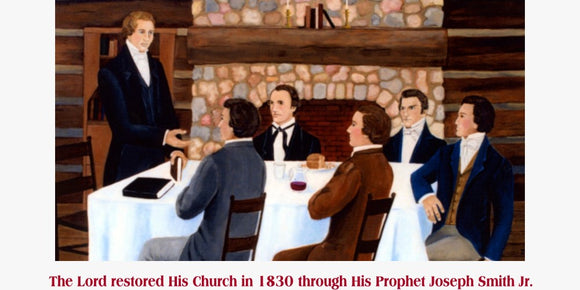
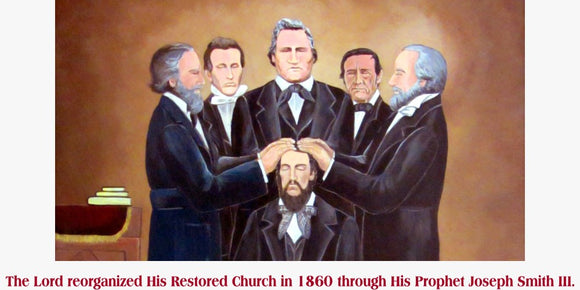
The home page provides additional features to navigate our site. At the top of the home page, as well as all other pages, there are links to sign into your account, to create an account, to access your shopping cart, and to search all of our products. It should be noted that we do not require you to have an account to access our free information or to purchase a product. The slide show consists of four slides. It is intended to briefly show our belief that Jesus Christ built His Church when He lived on earth. After its apostasy, He restored it to the earth in three key events. The slide will advance automatically to show the key events in order. As long as you remain on the home page, the slides will continue to repeat their sequence. For more information about the four slides, click on any one of them. Featured categories of products appear under the slides. Click on an image to go to all products in that category. Click on the link "more categories" to view all of our product categories and to access all of our products in those categories. The footer is at the bottom of all of our pages and provides links to information about us and to our policies. It also provides our users the opportunity to sign up for a news letter, as well as shows the icons of the credit cards we accept.
Shipping Insurance
Shipping insurance may be required on orders which exceed a value of $100 and/or weigh over 20 pounds. Before fulfilling your order, if insurance is needed, we will call you for your approval before charging you for the insurance.